Modern SaaS design often prioritises novelty over clarity. Many products chase visual trends, experimental interfaces, and hyper-digital aesthetics in an attempt to appear innovative. But the products that feel most trustworthy are rarely the most visually aggressive. More often, they are the most coherent, restrained, and familiar.
Aconia builds SaaS UI mockups and presentation systems rooted in continuity: warm, lived-in environments that make software feel clear, credible, and deeply personal.
The Anxiety of Modern Design
In the modern design industry, there is a recurring fear: the fear of being unoriginal.
Designers are taught to pursue disruption and innovation as if familiarity itself were a failure. Established conventions are abandoned in pursuit of uniqueness, even when those conventions already serve users effectively. Interfaces that already work are redesigned simply to appear new. Products compete to look more futuristic, more abstract, and more technologically advanced, often at the expense of clarity and calmness.
For most of human history, however, the goal of design was not to be different. It was to be right.
“The goal of design was not to be different. It was to be right.”
Continuity as a Design Principle
Design continuity is not about resisting progress. It is about recognising that refinement is often more valuable than reinvention.
Much of modern UX and UI design is built on stable conventions that users already understand:
Navigation systems
Information hierarchy
Buttons and controls
Forms and interaction flows
Layout structures
These patterns persist because they work. They reduce cognitive friction and allow users to focus on the product itself rather than decoding the interface around it.
The role of the designer is not always to reinvent these systems, but to refine how they are presented, understood, and experienced. Strong software products rarely feel chaotic or visually anxious. They feel coherent.
“We have traded the calm of the best for the noise of the different.”
Why Warmth Matters in SaaS Presentation
Many SaaS products are presented inside cold, abstract environments: floating gradients, dark voids, excessive glassmorphism, and hyper-polished futuristic scenes. While visually striking in isolation, these aesthetics often create emotional distance between the product and the user.
Aconia takes the opposite approach.
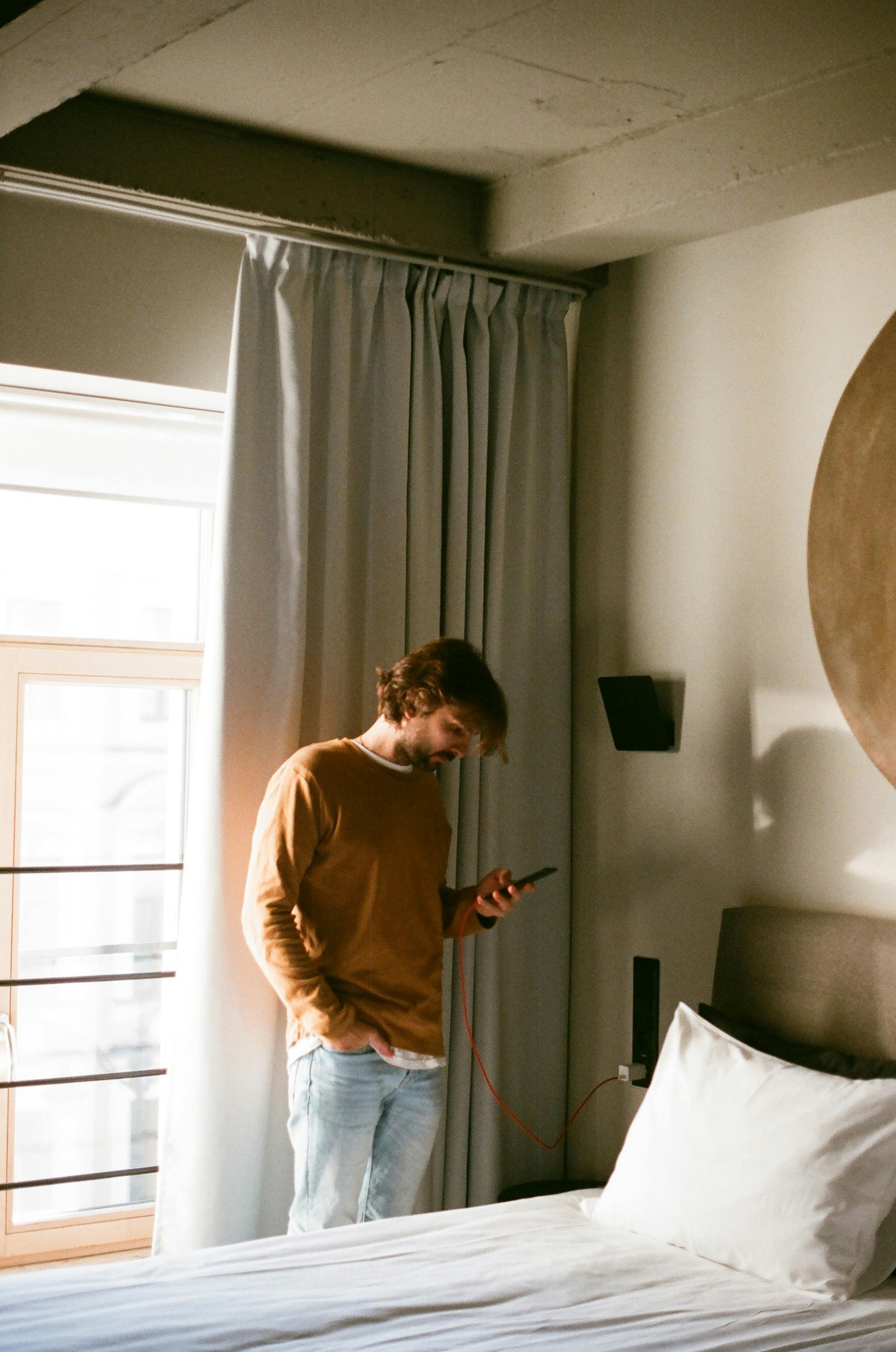
Our mockups place software inside warm, familiar, lived-in environments: wooden desks, natural light, restrained materials, and grounded workspaces that feel connected to real human routines. The intention is not to overpower the interface with styling, but to create a calm presentation layer that allows the product itself to lead.
Products shown in familiar environments often feel more trustworthy, more mature, and more immediately understandable. Warmth grounds software in reality. It helps products feel less like speculative concepts and more like tools that already belong in people’s lives.
“Warm, familiar, lived-in environments create trust faster than futuristic spectacle.”
The 10% Rule in Practice
For much of history, meaningful design evolution happened incrementally. A convention might change only slightly over decades because refinement mattered more than disruption. Innovation existed, but it arrived carefully, layered onto stable foundations.
In software design, the same logic still applies.
The most effective products usually preserve familiar interaction patterns while refining the details that genuinely improve usability and perception: a clearer hierarchy, a calmer visual environment, a more coherent presentation system.
The 10% that actually matters.
This is where continuity becomes commercially valuable. Teams spend less time reinventing solved problems and more time strengthening the clarity of the product itself.
The Return to Coherence
As software becomes increasingly saturated with noise, coherence itself becomes a competitive advantage.
The products that endure are rarely the ones attempting to reinvent every convention. More often, they are the products that understand where standards already serve the user and where refinement can genuinely improve the experience.
Sophisticated design is not the rejection of familiarity. It is the intelligent use of it.
The future of software may not belong to the loudest products, but to the most coherent ones.
aconia builds SaaS UI mockups and presentation systems for teams that value continuity, clarity, and restraint over novelty.
What is continuity in SaaS design?
Continuity in SaaS design means building on familiar UX conventions and grounded visual environments rather than constantly reinventing interaction patterns. The goal is to create products that feel intuitive, trustworthy, and coherent.
Why do many SaaS products feel visually cold?
Many software companies adopt highly abstract visual trends such as dark voids, floating gradients, and futuristic interfaces in an attempt to appear innovative. While visually striking, these styles can create emotional distance and reduce clarity.
Why does aconia use warm, lived-in environments?
Warm, familiar environments help software feel more grounded and understandable. Natural materials, restrained lighting, and realistic workspaces create a sense of trust and continuity between the product and everyday life.
Does familiarity reduce originality in UI design?
Not necessarily. Most successful interfaces rely on shared patterns because users already understand them. Strong design often comes from refinement and coherence rather than constant reinvention.
What does Aconia create?
Aconia creates SaaS UI mockups, presentation systems, and art-directed environments designed for websites, pitch decks, demos, and product launches.
Aconia builds warm, art-directed mockups that make SaaS products feel familiar and shipped.
Browse collections →